Meme coin trading in 2026 rewards narrative reading and strict exits more than luck
You can order the same kind of articles for your own video to boost it on YouTube and Google. Just message the Telegram bot @sat_sit_bot. Articles with your video embedded are written and posted by the bot itself — on popular topical sites (no ads). Free trial — 50 articles.
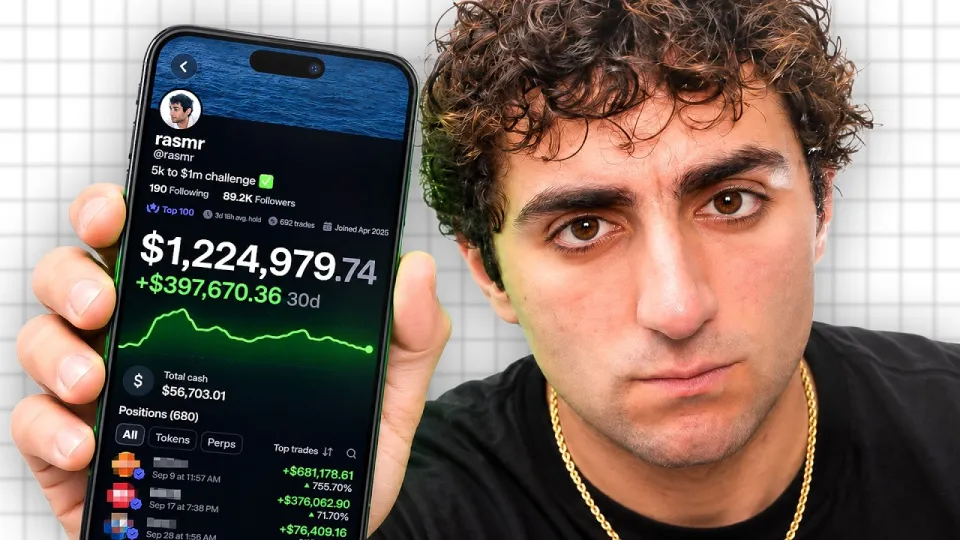
· based on the channel rasmr
A meme coin is a cryptocurrency whose value rests almost entirely on narrative, community and attention rather than on revenue, cash flow or a working product, which makes it a speculation vehicle where market cap, liquidity and exit discipline matter far more than the chart pattern. Traders who treat these tokens as short-lived attention markets — with a plan for entry size, target market cap and staged selling — consistently do better than those who buy because a chart is going up. If you want to trade these markets with a real order book behind you, you can open an account through the rasmr referral link on fomo.family.
What actually drives a meme coin price
A meme coin has no earnings to discount, so its price is a function of how many people are paying attention and how much new money is arriving. That means the useful questions are about the story, not the technology: who launched the token, what narrative it plugs into, how it is being distributed, and whether the audience it targets is large enough to keep buying.
In practice, three forces do most of the work:
- Narrative fit. A token that lands on a story the market already cares about — a viral trend, a cultural moment, a well-known figure, an AI agent, a political event — gets attention for free. A token with a clever name but no story has to buy its audience.
- Distribution. Fair launches, airdrops, presales and insider allocations produce very different holder bases. A token where a small group holds a large share has a permanent overhang of sellers who know more than you do.
- Liquidity. Thin pools mean your own buy moves the price up and your own sell moves it down. Slippage is a real cost, and on small caps it can exceed the entire move you were hoping to capture.
A related point that experienced traders raise repeatedly: the earliest buyers are often inside private groups where a launch is discussed before it goes public. You cannot compete on speed with that circle, so you should not try — compete on selection and on how well you exit.
Read market cap, not the price of one token
Market cap is the single most useful number in meme coin trading because it tells you how much money would have to enter to move the token to your target. A coin trading at a fraction of a cent is not "cheaper" than one trading at a dollar; the supply is simply different.
A practical way to use it:
- Write down the current market cap before you buy, and the market cap you expect the narrative to reach.
- Sanity-check that target against comparable tokens that ran on the same kind of story. If the biggest previous winner in that category peaked at a similar level, the upside is probably already priced in.
- Remember that market caps on low-float tokens are partly fictional: if only a small percentage of supply circulates, the quoted valuation is built on a thin slice of trading.
- Treat large round numbers as magnets and as walls. Traders cluster their sell orders and their attention around them, which is exactly where momentum tends to stall.
Where meme coin traders actually lose money
The most common losses in this niche come from behaviour, not from bad picks. Two patterns dominate: refusing to take a loss while hoping the chart recovers, and refusing to take a profit while hoping it goes higher.
The second one is the more expensive. Seeing an unrealised gain of seven figures and giving all of it back because the position was never trimmed is a story that recurs constantly in trading communities. The mechanics are simple — a token can fall 80% in minutes and liquidity disappears exactly when everyone wants out — so the fix has to be structural rather than psychological:
- Decide your sell levels in market cap terms before you enter, and write them down.
- Sell a portion on the way up. Taking 20–30% off at the first target turns a lottery ticket into a position you can hold without panic.
- Move your remaining risk to zero by recovering your initial capital, then let the rest run with a trailing plan.
- If the thesis breaks — the narrative dies, the team wallets start moving, the community goes quiet — exit on the evidence, not on the hope of a bounce.
- Never add to a losing position just because the price is lower. Averaging down on an asset with no fundamentals is how small losses become account-ending ones.
Emotion is not a character flaw here, it is the default setting, and the market is designed to trigger it. Rules written before entry are the only reliable defence.
How to judge whether a meme coin is likely to rug
A rug is not random; it leaves fingerprints in the token's structure and in the behaviour of its largest holders. You will not catch every one, but you can filter out most of the obvious ones before you risk capital.
- Holder concentration. Check how much supply the top wallets control and whether those wallets are linked. A handful of addresses holding a large share can exit into your buy at any moment.
- Liquidity ownership. Find out who controls the liquidity pool and whether it is locked. If the deployer can withdraw it, they can end the market whenever they choose.
- Contract permissions. Mint authority, freeze authority, transfer taxes and upgradeable contracts all give the deployer power over your position. Revoked or renounced permissions remove a whole category of risk.
- Wallet history. Look at what the deployer's addresses did with previous tokens. Serial launchers who abandoned earlier projects are telling you their business model.
- Social authenticity. Organic communities argue, post memes and complain about the price. Paid groups and bot-filled channels praise in unison and go silent the moment volume drops.
- Age and volume profile. A token that appeared hours ago with a vertical chart and no consolidation has no support beneath it.
None of this makes a token safe. It only removes the setups where the outcome is decided before you arrive.
Position sizing and the mechanics of getting out
Getting out is a skill separate from getting in, and it deserves its own plan. On small-cap tokens, the exit is usually harder than the entry because liquidity thins as price falls and because everyone is trying to leave through the same door.
Treat size as a function of liquidity rather than of conviction. A position you cannot sell in a few orders without moving the price by double digits is too large, regardless of how good the story looks. Split exits across several orders and several price levels, and accept that you will never sell the exact top — capturing most of a move is the realistic goal.
Fees and slippage belong in the calculation from the start. On very small caps, the round trip can quietly consume a meaningful slice of the gain, which is another argument for fewer, better-researched trades rather than constant rotation.
Common questions traders ask before their first trade
Beginners usually arrive with the same set of worries: how much capital to start with, whether a token tied to a viral event is a good buy, and how to avoid the emotional mistakes that everyone warns about. The honest answers are unglamorous — start with an amount you can lose entirely, treat hype-driven tokens as crowded trades rather than discoveries, and assume that any position can go to zero.
A useful habit is to keep a short written log of every trade: the narrative, the entry market cap, the planned exits and what actually happened. After a few dozen entries, your own record becomes a better filter than any influencer's opinion, including this one.
Useful links
The takeaway for anyone trading meme coins
Meme coins reward preparation and punish improvisation, and the difference shows up in the exit rather than the entry. Read the narrative, size the position against liquidity, write your market cap targets before you buy, and sell in tranches instead of waiting for a perfect top. The channel rasmr condenses years of this experience into a short, practical briefing, and it is a good starting point for building your own rulebook. Whatever you take from it, the discipline has to be yours — the market will not supply it.
If you want to put those rules to work, register through the fomo.family link and start with a position small enough that a total loss changes nothing about your life.
Key takeaways
- Meme coin prices are driven by narrative and attention, not by cash flow or earnings.
- Market cap, not unit price, is the number that tells you how much upside is left.
- Liquidity and holder concentration decide whether you can actually exit at your target.
- Emotional trading — averaging into a loser, round-tripping a winner — is the most common way traders lose money.
- Selling into strength in tranches beats waiting for one perfect top.
Source: 5 Years of Memecoin Knowledge in 12 Minutes · Markdown version
Questions & answers
What is a meme coin in simple terms?
A meme coin is a cryptocurrency whose price depends on attention, community and narrative rather than on revenue or utility. Its supply is often large and its market cap small, which makes it volatile and highly sensitive to social media trends. Treat it as a short-term speculation, not an investment.
How do I decide when to sell a meme coin?
Set target market caps before you enter and sell in portions as the price approaches them. Taking part of the position off early recovers your initial capital and removes the pressure to guess the top. If the narrative or the holder base deteriorates, exit on that evidence rather than waiting for a bounce.
Can I avoid tokens that are going to rug?
You can filter out many of them by checking holder concentration, who controls the liquidity, whether the contract still has mint or freeze permissions, and what the deployer's previous tokens did. No checklist makes a token safe, so position size should always assume the worst case.
Is it worth buying a coin built around a viral event or a game release?
Hype-driven tokens are crowded trades: by the time a mainstream event is obvious, the earliest buyers are already positioned. They can still run, but the upside is smaller and the competition for exits is larger. If you participate, size small and plan the exit before the news cycle fades.